
Profile

Associate Professor at Graduate School of Engineering Science, Osaka University. Research interests include cognitive developmental robotics, computational modeling of emotional development, and human-robot interaction.

Education

Ph.D. in Engineering

2013-04-01
2017-09-30

Osaka University

M.Eng.

2011-04-01
2013-03-31

Osaka University

B.Eng.

2009-04-01
2011-03-31

Advanced Course in Electronic-Mechanical Engineering, Toyota National College of Technology

Interests

Cognitive Developmental Robotics Computational Modeling of Emotional Development Human-Robot Interaction Symbol Emergence Robotics Qualia and Consciousness Robot Learning (Imitation / RL / LLM)
Research

Can robots have emotions? How does the human mind develop?

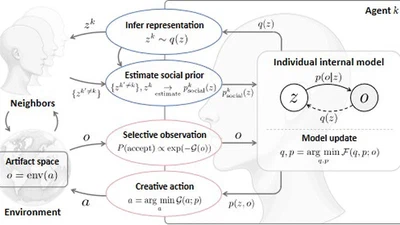
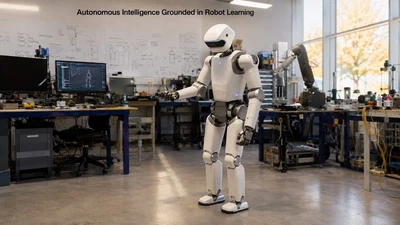
Our research group explores these questions from the perspectives of cognitive developmental robotics and symbol emergence robotics. We work on the computational modeling of emotional development, human-robot interaction based on active inference, the correspondence between qualia structures and information structures, and the modeling of creativity. We also investigate behavior acquisition through imitation and reinforcement learning, robot action planning and task execution leveraging foundation models such as Large Language Models (LLMs) and Vision-Language Models (VLMs), and the construction of embodied intelligence grounded in the integration of multimodal information. Centered on robot learning, our research approaches the essence of intelligence from multiple angles.

News

Upcoming Talk at the 21st IEICE DPF Technical Meeting

I will give a talk at the 21st Technical Meeting of the IEICE Special Technical Committee on Digital Service Platform Technology (DPF), to be held on Friday, June 5, 2026 in hybrid …

Four Presentations at JSAI 2026 (40th Annual Conference of JSAI) featured image

Four Presentations at JSAI 2026 (40th Annual Conference of JSAI)

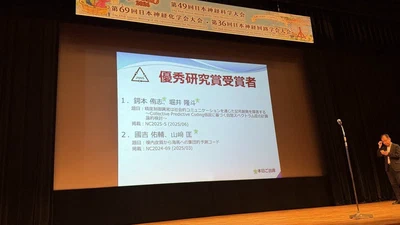
Our lab will give the following four presentations at the 40th Annual Conference of the Japanese Society for Artificial Intelligence (JSAI 2026), to be held June 8–12, 2026 at …

Upcoming Talk at the 2nd Osaka University OCEANS Symposium

I will give a talk and join a panel discussion at the 2nd Osaka University OCEANS Symposium — “Down-to-Earth AI Development with the Maritime Industry,” to be held on Wednesday, …

Research Topics

Computational Modeling of Emotional Development

This line of research computationally models how human emotions develop through multimodal perception (vision, audition, touch). We focus on tactile dominance in infant-caregiver …

Constructive Study of Qualia and Consciousness

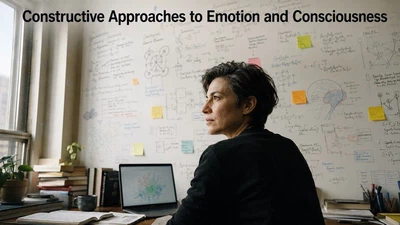
Can robots have emotional qualia? Addressing this question, we work on elucidating the correspondence between qualia structures and information structures. As part of the …

Human-Robot Interaction

Research on human-robot interaction aimed at the coexistence of humans and robots, including dialogue robots in social contexts, mental health support, and communication support. …

Research Projects

Human–AI Symbiosis and Co-Creation: Self Mirroring Twins for Active Social Co-Creation

A JST CREST project building an AI foundation that supports behavior change and active social co-creation through symbiosis with "Self Mirroring Twins."

AI Cobots for Next-Generation Shipyards

Developing robot learning and skill acquisition algorithms to realize AI cobots that work side by side with humans on shipyard floors.

Comforting Social Touch — Individual Differences and Cognitive-Scientific Understanding

Elucidating, through cognitive science, the mechanisms and individual differences of social touch that creates a sense of comfort between humans, and between humans and robots.

Featured Publications
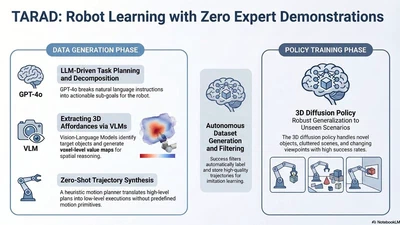
TARAD: Task-Aware Robot Affordance-Centric Diffusion Policy Learned From LLM-Generated Demonstrations featured image

TARAD: Task-Aware Robot Affordance-Centric Diffusion Policy Learned From LLM-Generated Demonstrations

We propose a task-aware, robot-affordance-centric diffusion policy. By integrating the notion of affordances into a diffusion model, the proposed method enables more adaptive …

avatar
Takato Horii
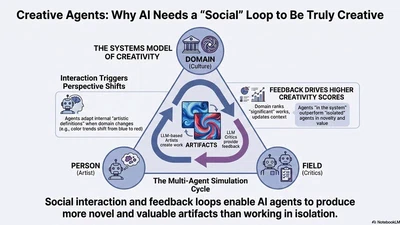
Creative Agents: Simulating the Systems Model of Creativity With Generative Agents featured image

Creative Agents: Simulating the Systems Model of Creativity With Generative Agents

This work simulates the systems model of creativity using generative agents. By computationally reproducing human creative processes, we explore how creativity emerges.

avatar
Takato Horii
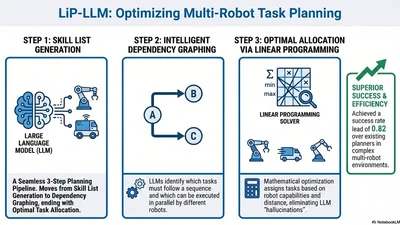
LiP-LLM: Integrating Linear Programming and Dependency Graph With LLMs for Multi-Robot Task Planning featured image

LiP-LLM: Integrating Linear Programming and Dependency Graph With LLMs for Multi-Robot Task Planning

We propose a multi-robot task planning method that integrates Large Language Models (LLMs) with linear programming and dependency graphs. By combining the natural-language …

avatar
Takato Horii
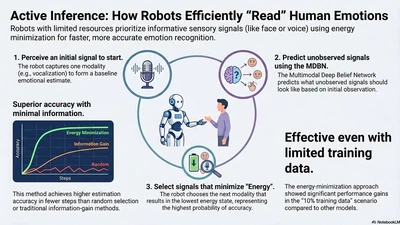
Active Inference Through Energy Minimization in Multimodal Affective Human-Robot Interaction featured image

Active Inference Through Energy Minimization in Multimodal Affective Human-Robot Interaction

Based on the framework of active inference, we propose an energy-minimization approach to multimodal affective human-robot interaction. The proposed mechanism enables a robot to …

avatar
Takato Horii